Historical Context
Standing beside the Guadalquivir River, the Torre del Oro is one of Seville’s most recognizable riverside monuments. It is not a palace, cathedral, or grand square, but a compact defensive tower with a long memory: military frontier, river guardian, naval landmark, museum, and symbol of the city’s maritime past.
The tower dates to the 13th century, during the Almohad period, when Seville was a fortified city closely tied to the river. Built as an albarrana tower, an outer defensive tower connected to the city’s walls, it helped protect the river entrance and the busy Arenal area, historically linked to port activity. According to Seville tourism sources, a heavy chain once stretched from the tower to the opposite bank to block hostile ships from moving along the Guadalquivir.
Architecturally, the Torre del Oro is distinctive for its polygonal form. The lower sections are dodecagonal, while the upper cylindrical body with its small dome was added in the 18th century. The tower is about 36 meters high in its current form, compact but imposing when seen from the riverside promenade. Its name, “Tower of Gold,” is often surrounded by romantic legends, but the official museum source explains that the golden shine was linked to the reflection of its historic lime-and-straw mortar coating, rather than to stored treasure or gold tiles.
The monument has had several uses over time. Before becoming a museum, it served at different moments as a chapel, a prison for nobles, a gunpowder store, and offices connected to the port and naval administration. In 1936, the Ministry of the Navy authorized the installation of a maritime museum in the tower, and the museum opened in 1944 after restoration works. Today, the Torre del Oro houses the Maritime Museum of Seville, a small but worthwhile collection that connects the monument to the river, navigation, and Spain’s naval history.
Its cultural meaning lies in that connection. The Torre del Oro reminds visitors that Seville was not only a city of churches and palaces, but also a river port shaped by trade, exploration, defense, and movement.
Prices and Visiting Time
At the time of writing, official information states that access to the museum is free, although a voluntary contribution is requested for its maintenance. This is important because some third-party travel sites may still list fixed ticket prices. Before visiting, always confirm the latest conditions on the official museum website, especially around holidays or maintenance closures.
The official opening hours are generally Monday to Friday from 9:30 a.m. to 7:00 p.m., with the last entry at 6:30 p.m. On Saturdays, Sundays, and public holidays, the tower usually opens from 10:30 a.m. to 7:00 p.m., also with last entry at 6:30 p.m. The museum notes closures on 1 and 6 January, Good Friday, 1 May, and 25 December. There are also special reduced hours on 5 January, and the museum has announced a midday closure on Saturdays and Sundays from 2:00 p.m. to 3:00 p.m. Check the official page before going, as schedules can change.
A visit usually takes around 30 to 45 minutes. Allow closer to an hour if you like reading museum panels, looking at nautical instruments and ship models, or spending time on the panoramic terrace. The museum is arranged over two visitable floors plus the terrace, so it is easy to include between larger sights.
The best time to visit is early in the morning, when the riverside is quieter and the light is soft on the stone, or later in the afternoon before sunset, when the Guadalquivir promenade becomes especially atmospheric. In summer, avoid the hottest part of the day if possible. The visit involves moving through a historic tower, so travelers with mobility concerns should check access conditions in advance.
For groups, the museum requests advance reservation by email, and official information states that group reservations are not accepted on weekends or public holidays.
What to Do Nearby After Visiting
The Torre del Oro sits in one of Seville’s most walkable areas, making it easy to build a relaxed route around the visit.
Start with the river itself. A stroll along Paseo de Cristóbal Colón gives you classic views of the Guadalquivir, passing riverboats, bridges, and the opposite bank of Triana. This is one of the simplest pleasures in Seville: no ticket, no timetable, just warm light, water, and city life.
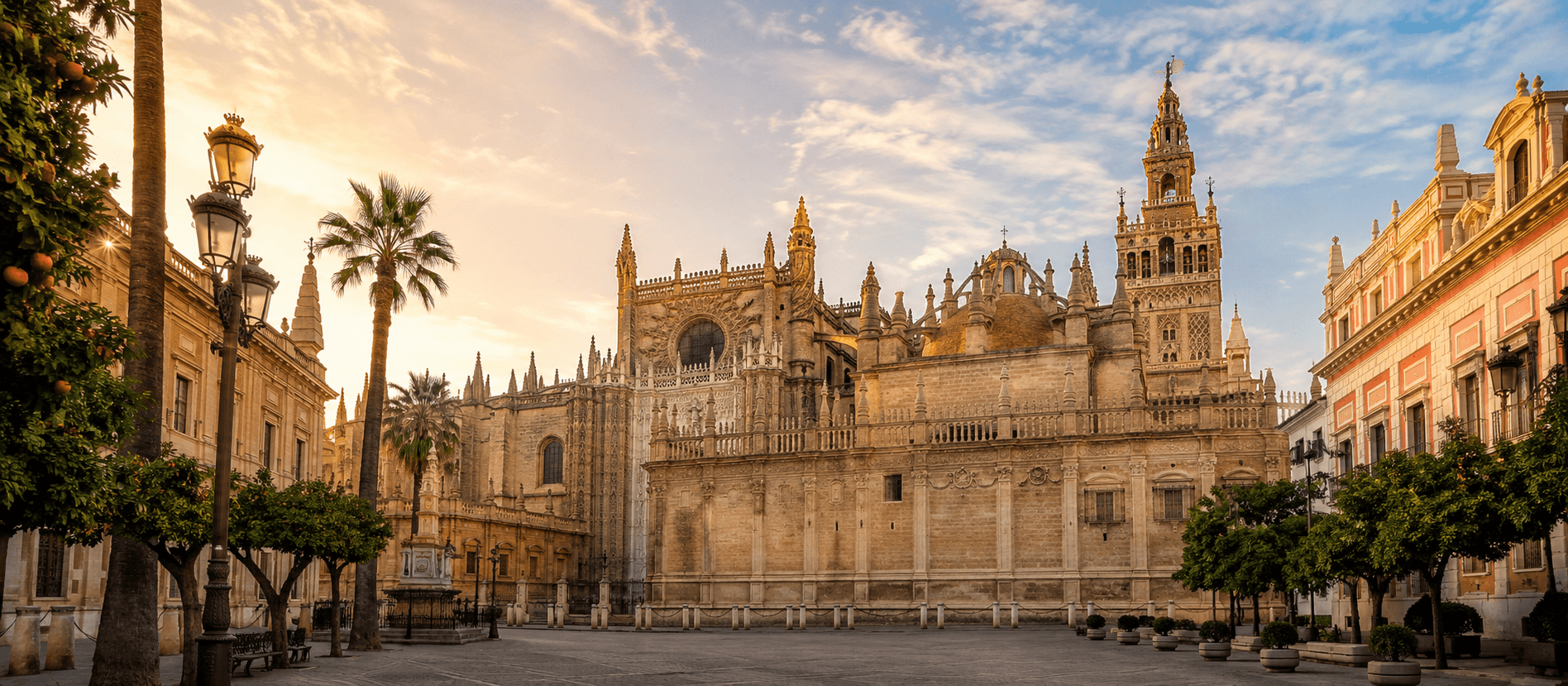
From the tower, you can walk toward the historic center and reach Seville Cathedral, La Giralda, the Real Alcázar, and the Archivo de Indias. These monuments form the city’s UNESCO-listed core and deserve more time than the tower, so they work best either before your visit or as a full afternoon plan.
Another easy option is to cross the river toward Triana, one of Seville’s most characterful neighborhoods. Walk over the Puente de Isabel II, browse the Mercado de Triana for tapas or a casual bite, and continue along Calle Betis for river views back toward the old city. Triana is also closely associated with ceramics and flamenco traditions, making it a rewarding contrast to the monumental center.
If you want a museum or cultural stop nearby, consider the Plaza de Toros de la Real Maestranza, close to the riverfront. Even if bullfighting is not part of your interests, the building is architecturally and historically significant, and visitors can decide whether its museum fits their travel style.
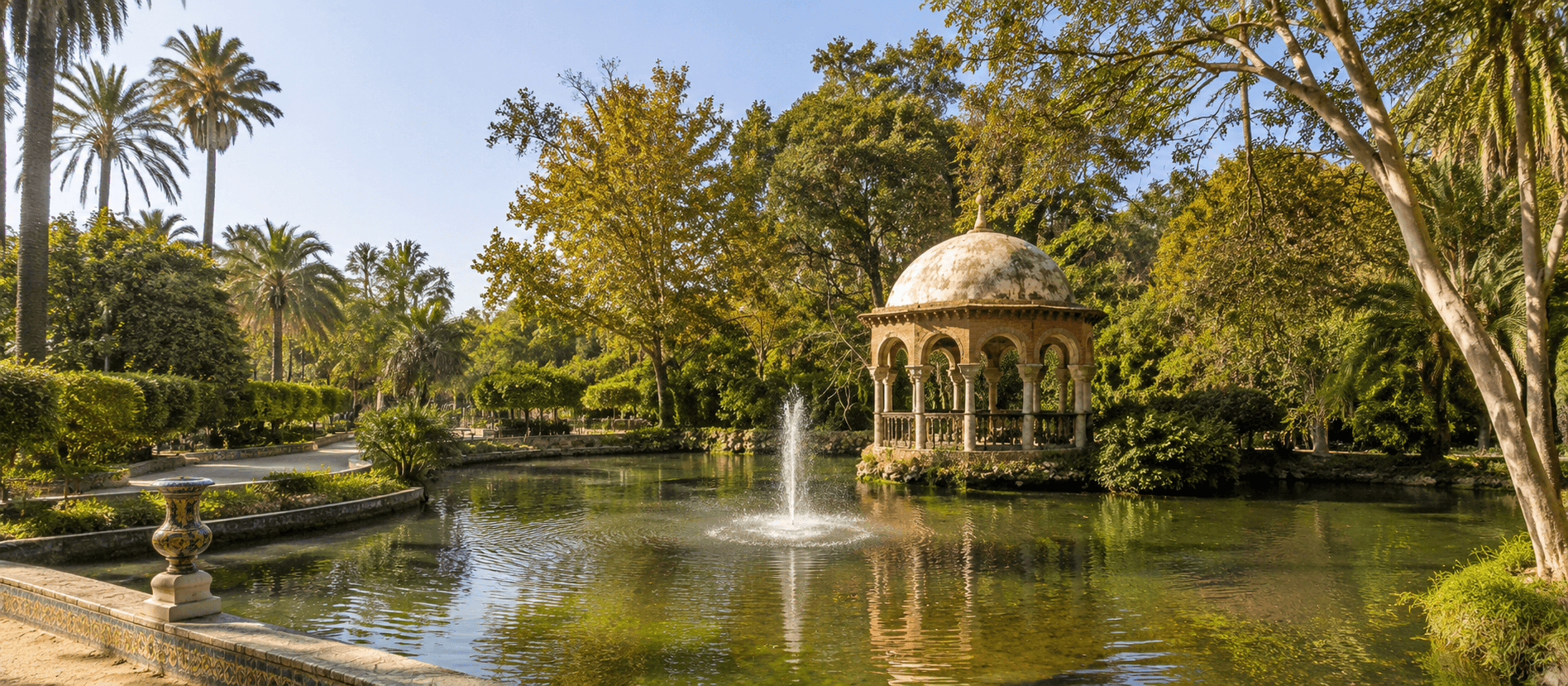
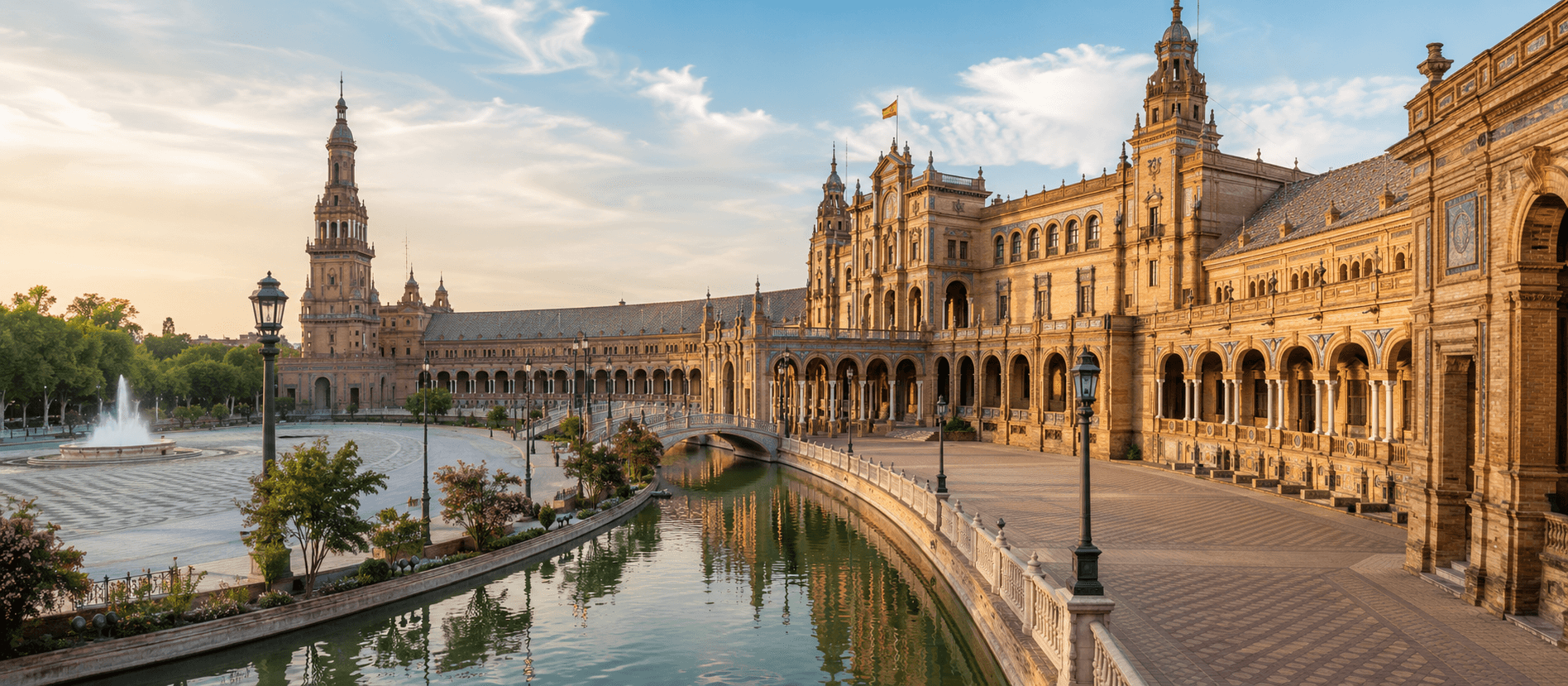
For a longer walk, continue south toward Parque de María Luisa and Plaza de España. The route follows the river and leads toward one of Seville’s most photogenic public spaces, created for the Ibero-American Exposition of 1929. It is a good follow-up if you want gardens, shade, tiled details, and wide-open scenery after the compact interior of the tower.
Café stops are easy to find around the riverfront, in Triana, and near Puerta de Jerez. For something simple and local, choose a terrace with a view rather than rushing to the next monument.
Conclusion
The Torre del Oro is small compared with Seville’s cathedral or Alcázar, but that is part of its appeal. It offers a focused, memorable encounter with the city’s river history: defensive walls, naval stories, changing uses, and a rooftop view over the Guadalquivir. Visit it not only for the tower itself, but for the way it helps you understand Seville as a city built around water, trade, and movement.