Historical Context
María Luisa Park is not a monument in the narrow sense of a single building; it is one of Seville’s great historic landscapes, a green urban landmark where gardens, fountains, tiled benches, pavilions and exhibition-era architecture come together. Set south of the old city center, between avenues such as Paseo de las Delicias, Avenida de Portugal and Avenida de María Luisa, the park covers about 340,000 square meters and remains one of Seville’s most atmospheric public spaces.
Its story begins with the Palacio de San Telmo. In 1849, the Dukes of Montpensier acquired the palace and developed large surrounding gardens. The original landscaping was entrusted to the French gardener Lecolant, who created a garden influenced by English-style landscaping, with picturesque touches and some formal French elements. In 1893, the widowed Duchess, Infanta María Luisa de Borbón, donated much of the garden to the city. Seville named the future park in her honor.
The park took on its present identity in the early 20th century, when Seville prepared for the Ibero-American Exposition of 1929. The city chose the María Luisa area as part of the exhibition grounds, and architect Aníbal González led the broader planning and construction works. For the garden redesign, the city brought in Jean-Claude Nicolas Forestier, a French landscape architect associated with Paris parks. Forestier respected earlier features but reorganized the park with strong avenues, shaded axes, water features and romantic garden rooms.
María Luisa Park opened to the public on 18 April 1914. Its character reflects the eclectic taste of early 20th-century Seville: leafy promenades, fountains, ponds, ceramic details, brickwork and intimate “glorietas” that combine architecture and vegetation. Culturally, it represents a turning point in Seville’s public life: a former aristocratic garden transformed into a civic space, later framed by the international ambitions of the 1929 exposition.
Prices and Visiting Time
At the time of writing, María Luisa Park has no general admission ticket for ordinary visits. It is a municipal public park, so travelers can walk in without booking a standard entry slot. That said, conditions can change for restoration work, special events, weather alerts or temporary closures, so it is wise to confirm current information on Seville City Council’s official parks pages before visiting.
The municipal schedule lists the park opening at 8:00. Closing time varies by season: 22:00 in winter and 24:00 in summer. The city also notes that winter hours begin in October. Because local schedules may be adjusted, especially around events or maintenance, check the latest official timetable before planning a late visit.
For a relaxed first visit, allow 1.5 to 2 hours. This gives enough time to stroll through the shaded avenues, pause by the ponds and fountains, and continue toward Plaza de España or Plaza de América. If you plan to photograph, sketch, visit nearby museums or simply escape the heat, half a day can pass easily here.
The best time to visit is early morning or late afternoon. Seville can be very hot in summer, and although the park has plenty of shade, midday is not the most comfortable time for a long walk. Spring and autumn are especially pleasant, with softer light and more comfortable temperatures. Bring water, wear comfortable shoes and avoid feeding wildlife, especially around ponds.
Good entry points depend on your route. If you are coming from the historic center, enter near Plaza de España or the Prado de San Sebastián side. If you want a quieter approach, walk in from Paseo de las Delicias and move gradually toward the heart of the park.
What to Do Nearby After Visiting
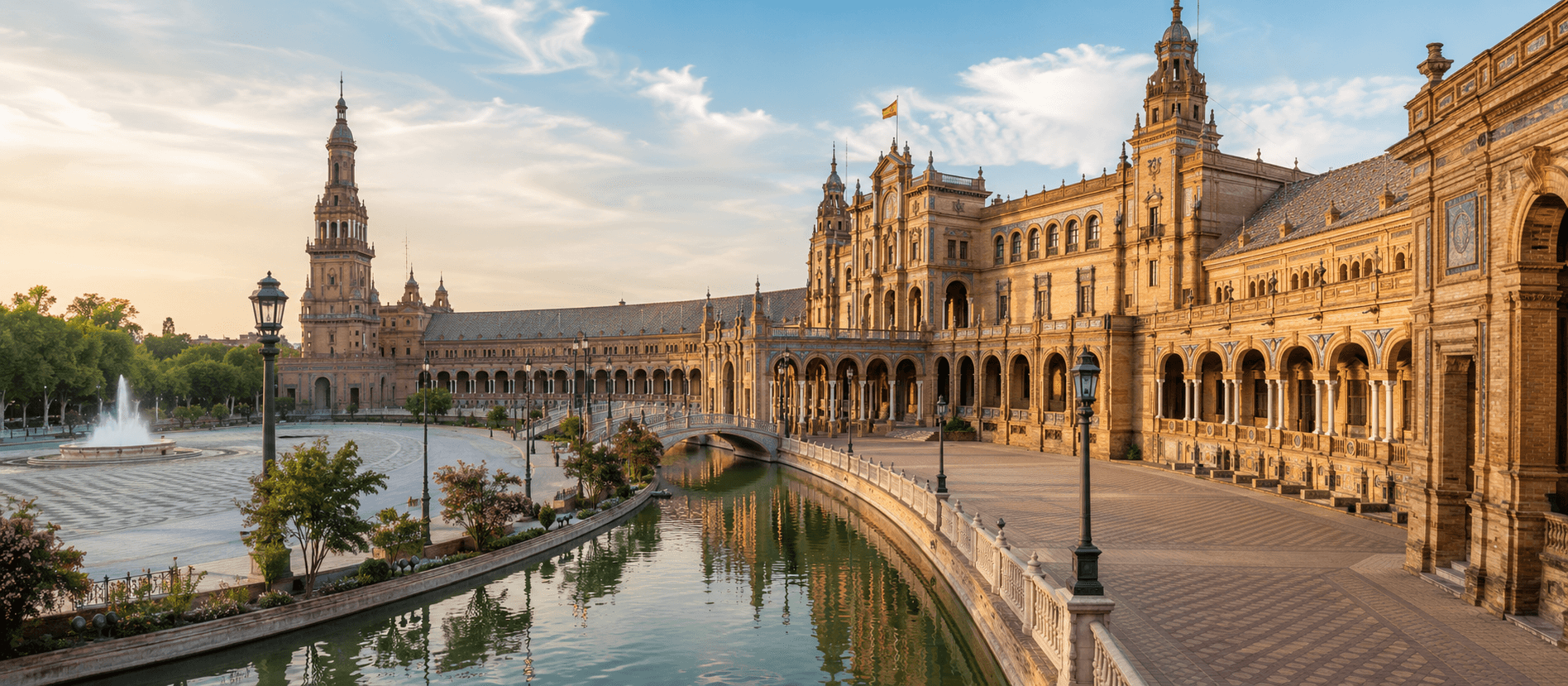
The easiest continuation is Plaza de España, directly connected to the park and one of Seville’s most recognizable landmarks. Designed by Aníbal González for the Ibero-American Exposition, it forms a grand semicircular space with tiled provincial benches, bridges and a canal. It is best visited slowly: look at the ceramic details, walk the arcaded gallery and pause along the water before heading back into the park’s shade.
Another excellent stop is Plaza de América, also within the María Luisa Park area. This square was designed for the 1929 exposition and is framed by three major buildings: the Museum of Arts and Popular Customs, the Archaeological Museum of Seville and the Royal Pavilion. The Museum of Arts and Popular Customs is especially fitting after a park visit, as it adds context on Andalusian everyday life, crafts, clothing and traditions. Museum hours and ticket policies vary, so check the official museum page before going. The Archaeological Museum is an important nearby institution, but travelers should note that it has been listed as temporarily closed for construction, so confirm its status before including it in your itinerary.
For families or rainy-day planning, Seville Aquarium sits not far from the park toward the river. It has its own tickets and seasonal hours, so it works best as a planned add-on rather than an improvised stop. Another gentle route is to walk north toward the old tobacco factory area, the University of Seville, and then toward the Alcázar and Cathedral district. This creates a beautiful transition from garden landscape to monumental historic Seville.
If you simply want to sit after walking, look for cafés and tapas bars around Prado de San Sebastián, Puerta de Jerez or Avenida de la Constitución. These areas are close enough to reach on foot and offer a practical break before continuing into Santa Cruz, the riverfront or the city center.
Conclusion
María Luisa Park is worth visiting because it shows Seville at its most graceful: shaded, architectural, historic and generous. It is a place where a royal garden became a public refuge, where the 1929 exposition left a lasting urban legacy, and where travelers can slow down between Seville’s busier monuments. Come for the greenery, stay for the fountains and tiled corners, and leave with a clearer sense of how beautifully Seville blends landscape, memory and civic life.