Historical Context
Seville Cathedral, officially the Cathedral of Saint Mary of the See, is not just the spiritual heart of the city; it is one of the clearest places to understand Seville’s layered past. Its story begins on the site of the city’s former Great Mosque, built during the Almohad period, when Seville was a major Islamic capital. After the Christian conquest of the city in 1248, the mosque was adapted for Christian worship. In 1401, the cathedral chapter decided to replace it with a vast Gothic cathedral, creating the monument visitors see today.
The result is a building where history has not been erased but absorbed. The Giralda, now the cathedral’s bell tower and one of Seville’s most recognizable silhouettes, began as the mosque’s minaret before being transformed after the Reconquest. The Patio de los Naranjos, or Orange Tree Courtyard, also preserves the memory of the former mosque courtyard, with its ordered trees and peaceful geometry offering a quiet contrast to the scale of the cathedral interior.
Architecturally, the cathedral is best known for its Gothic structure: soaring vaults, long naves, side chapels, carved stonework, and an immense sense of vertical space. Yet its character is richer than a single style. Across the complex, visitors encounter Almohad, Mudéjar, Gothic, Renaissance, Baroque, and later additions. This mix is part of its cultural meaning: Seville Cathedral is a monument to faith, power, artistic ambition, and the city’s changing role from medieval frontier city to Atlantic trading center.
In 1987, the cathedral was declared part of a UNESCO World Heritage Site together with the Royal Alcázar and the Archivo de Indias. The three monuments stand within a few minutes of one another and together tell the story of Muslim Seville, Christian Andalusia, royal authority, and Spain’s overseas empire.
Prices and Visiting Time
As of the official 2026 visitor information, the general ticket for the Cathedral and Giralda costs €13 online or €14 at the ticket office. Reduced admission is €7 online or €8 at the ticket office for eligible visitors, including seniors over 65, students up to 25, people with certain disabilities, and adult members of large families. Free admission applies to children up to 13 when accompanied by an adult, people with disabilities above 65%, and unemployed Spanish nationals, with official proof required. Audio guides are available for an extra fee, including a cheaper app version.
The standard cultural visit includes the Cathedral and Giralda and also gives free admission to the Church of El Salvador. Current general visiting hours are Monday to Saturday from 11:00 to 19:00, and Sunday from 14:30 to 19:00. Last entry is normally at 18:00. The cathedral also offers a free public visit on Sundays, except holidays, from 16:30 to 18:00, but this requires prior online reservation and capacity is limited.
The official estimated duration for a standard Cathedral and Giralda visit is about 75 minutes, though travelers who enjoy art, architecture, or photography should allow around 90 minutes to two hours. A guided visit is estimated at about 90 minutes. The visit begins at the Giralda, and access points vary depending on whether you have bought online or at the ticket office, so it is worth reading your ticket carefully before arriving.
The best time to visit is usually early in the day from Monday to Saturday, especially if you want to climb the Giralda before the building grows busier. Late afternoon can also be atmospheric, when the light softens around the historic center, but avoid arriving too close to last entry. In summer, the morning is more comfortable, while spring and autumn are generally the most pleasant seasons for walking around Seville. Because the cathedral is an active place of worship, opening hours and visitable areas may change for religious services or cultural events; always confirm times and prices on the official website before going.
What to Do Nearby After Visiting
One of the great pleasures of visiting Seville Cathedral is that you step out directly into the city’s most monumental quarter. The first stop should be Plaza del Triunfo, where the Cathedral, the Royal Alcázar, and the Archivo de Indias face one another in a remarkable concentration of heritage.
The Royal Alcázar is the natural follow-up if you still have energy for another major monument. Its palaces, courtyards, tilework, and gardens make it one of Seville’s essential sights, but tickets often sell out, so book ahead rather than treating it as an easy walk-up visit.
For a quieter cultural stop, visit the Archivo de Indias, housed in a Renaissance building beside the cathedral. It preserves records connected to Spain’s administration of its overseas territories, and its exhibitions are usually a calm counterpoint to the crowds outside.
From there, wander into Barrio Santa Cruz, the old Jewish quarter, where narrow lanes, whitewashed houses, tiny squares, and orange trees create one of Seville’s most atmospheric walks. It is touristy in places, but still lovely if you let yourself drift away from the busiest corners.
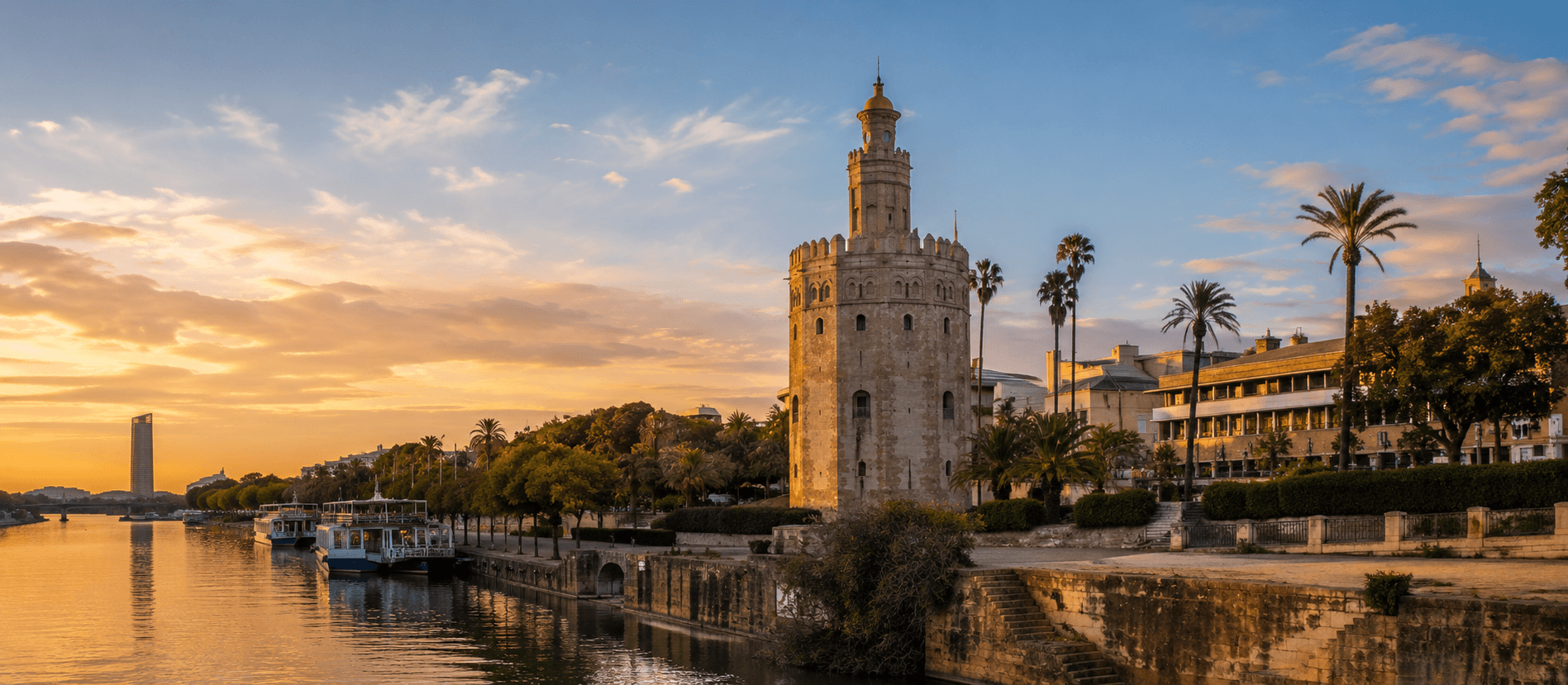
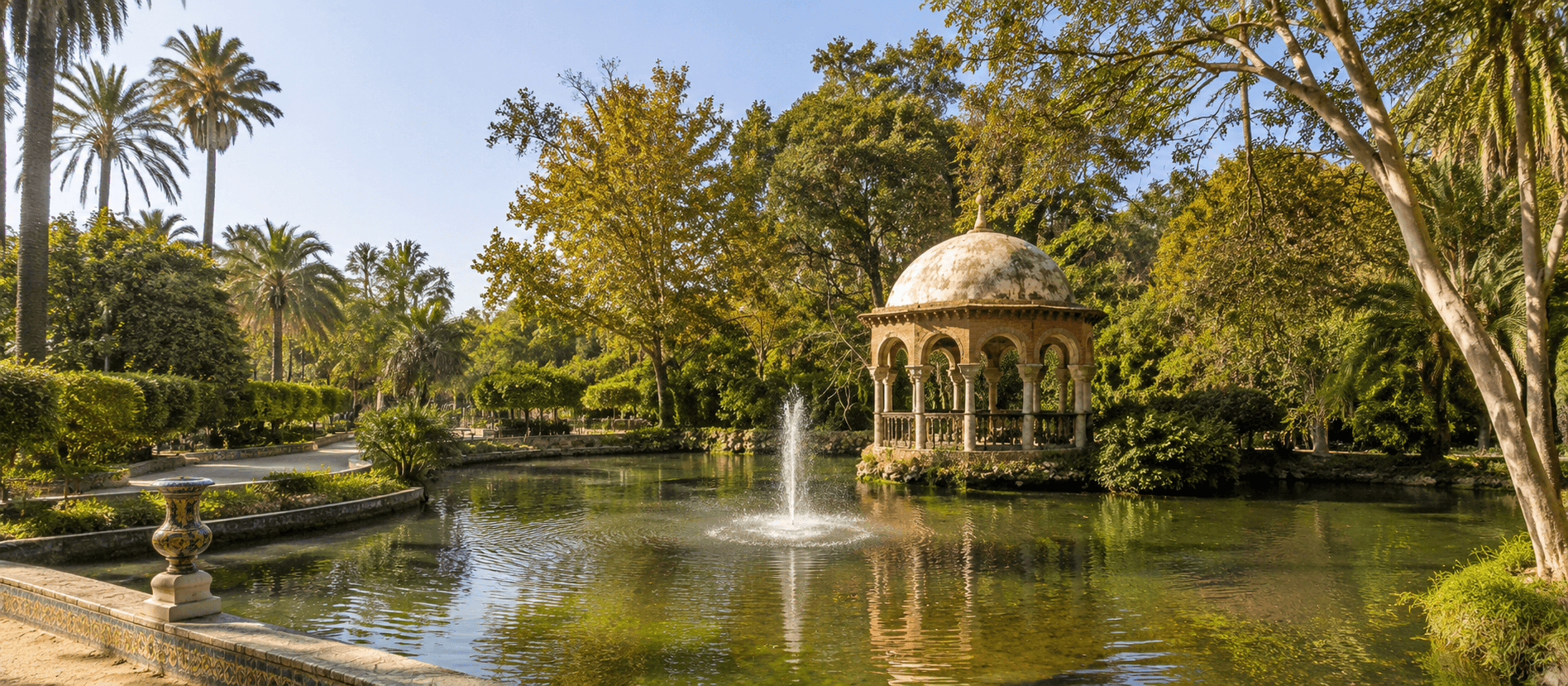
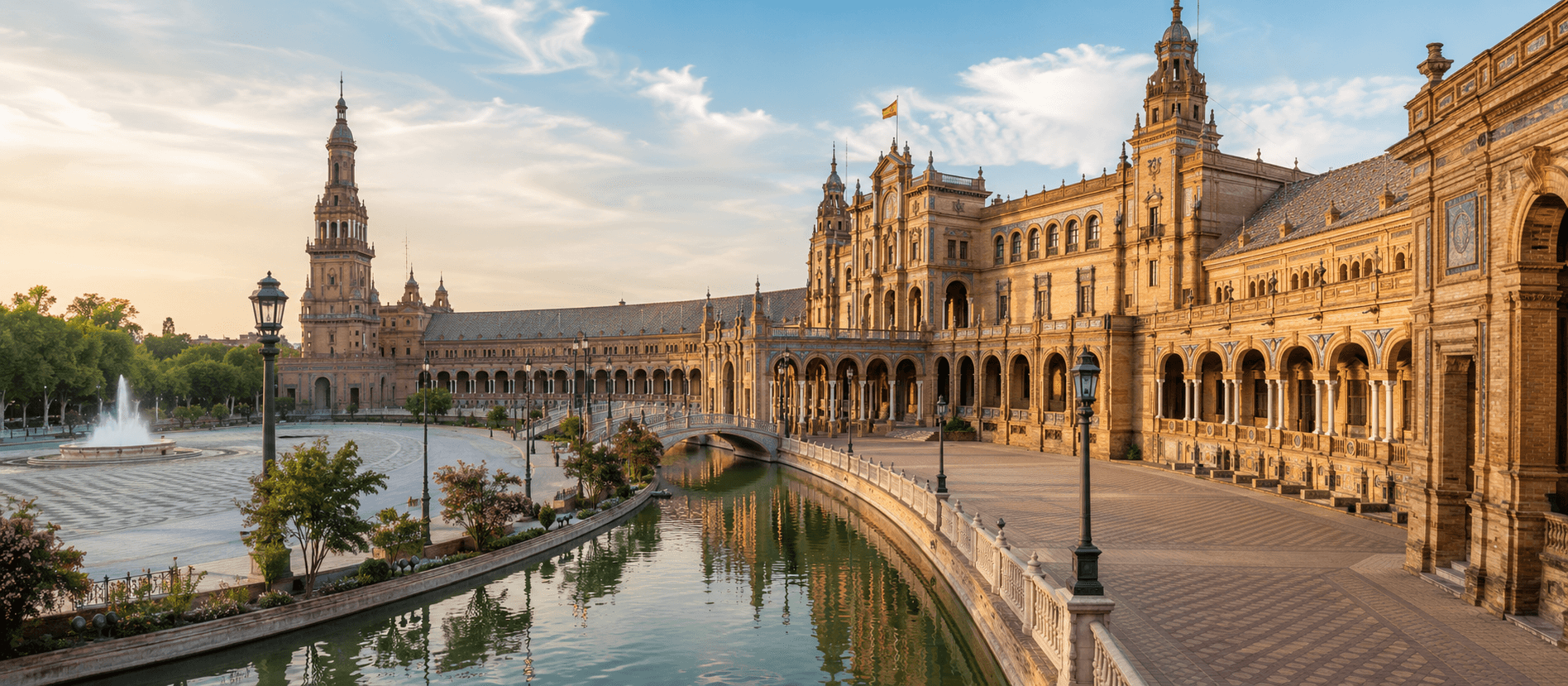
For views, cross toward the Guadalquivir River and walk to the Torre del Oro, a riverside tower that makes a good photo stop and places you near the promenade. Another option is to continue to Plaza de España and María Luisa Park, especially in the late afternoon when the tiled bridges and semicircular plaza glow in warm light.
For coffee or a light break, look around Avenida de la Constitución, Plaza Virgen de los Reyes, or the streets leading into Santa Cruz. The area has many cafés and tapas bars, though prices can be higher near the cathedral. For a more relaxed pause, choose a side street rather than the most obvious terrace facing the monument.
Conclusion
Seville Cathedral is worth visiting not only because of its size or fame, but because it gathers so many versions of Seville in one place. In its tower, courtyard, chapels, artworks, and vast Gothic spaces, you can feel the city’s Islamic, Christian, artistic, and imperial histories overlapping. It is a monument that rewards both a quick first look and a slow, attentive visit—and it remains one of the most powerful introductions to Seville.