1. Historical Context
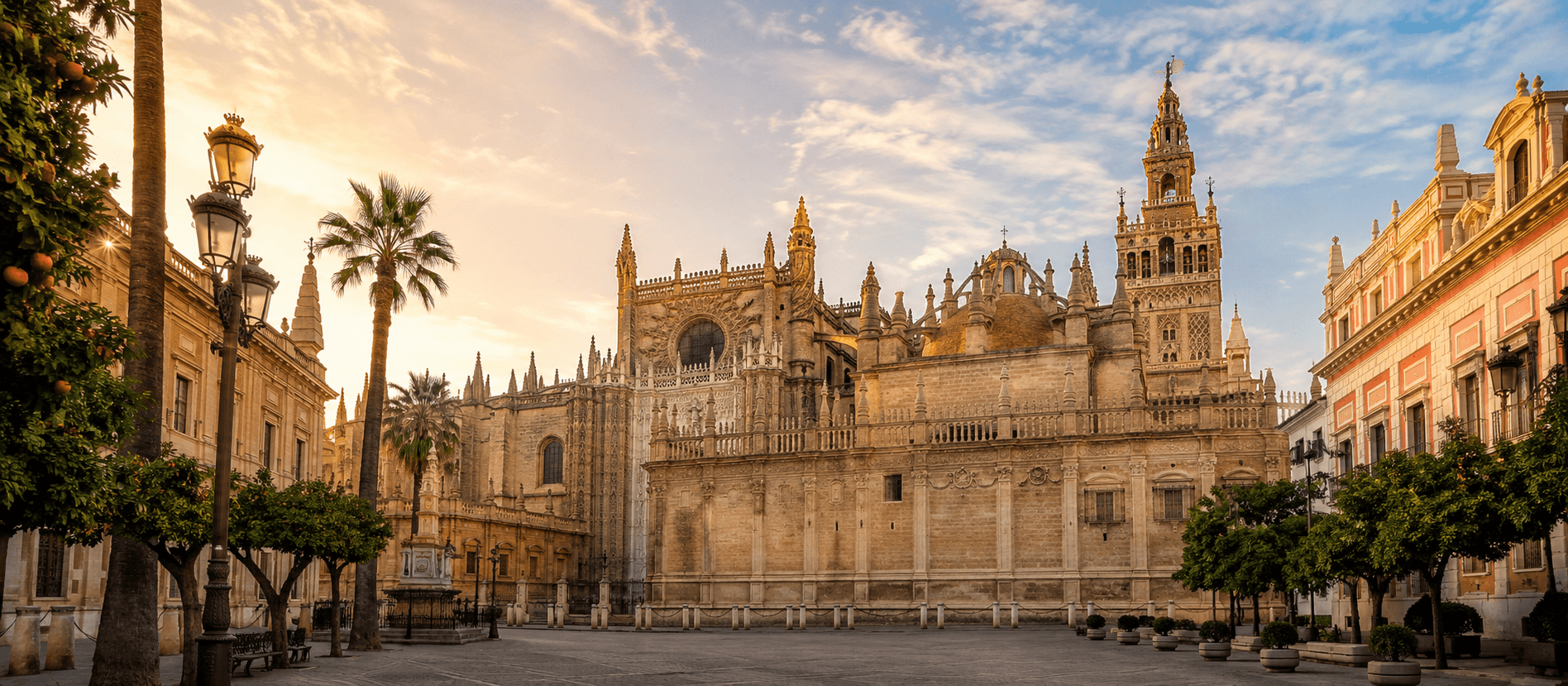
Rising above Seville Cathedral, La Giralda is one of the most recognizable monuments in Andalusia and a powerful symbol of the city’s layered past. Today it serves as the cathedral’s bell tower, but its story began in the Islamic period, when it was built as the minaret of the former Great Mosque of Seville. The lower section of the tower preserves its Almohad character, with brickwork, geometric decoration, and a strong vertical form that reflects the architectural language of 12th-century al-Andalus.
After the Christian conquest of Seville in 1248, the former mosque was gradually transformed into a Christian place of worship. When the great Gothic cathedral was later built on the site, the minaret was preserved and adapted as a bell tower. This decision gave La Giralda the extraordinary appearance travelers see today: an Islamic tower crowned by Renaissance additions. In the 16th century, architect Hernán Ruiz designed the upper belfry, creating a harmonious transition between the earlier Almohad structure and the Christian cathedral below.
At the very top stands the Giraldillo, a bronze weather vane representing Faith and victory. The name “Giralda” is linked to this turning figure, and over time it came to refer to the entire tower. The monument reaches about 104 meters in height, making it a dominant feature of Seville’s historic skyline. From many streets in the old town, a glimpse of the tower appears between balconies, orange trees, and whitewashed façades.
La Giralda is not only beautiful; it is culturally significant. Together with Seville Cathedral, the Real Alcázar, and the Archivo de Indias, it forms part of a UNESCO World Heritage Site. UNESCO describes the Giralda as a masterpiece of Almohad architecture and an important example of cultural syncretism because of its Renaissance upper section. For travelers, this makes the monument more than a viewpoint. It is a compact history of Seville itself: Islamic, Christian, royal, artistic, and civic.
2. Prices and Visiting Time
La Giralda is visited as part of the general ticket to Seville Cathedral. As of the official 2026 information, the general ticket costs €13 online or €14 at the ticket office. Reduced tickets are available for eligible visitors, including certain students, seniors, people with disabilities, and large-family adults, while free entry applies to specific groups such as children up to 13 accompanied by an adult and residents or natives of the Diocese of Seville. Proof may be required, so travelers should check the official Cathedral website before booking.
The general visit includes Seville Cathedral and La Giralda, and also includes free admission to the Church of El Salvador. Audioguides are available for an additional fee, with a standard audioguide and app option listed separately. Guided cultural visits are also offered, usually at a higher ticket price, and may be useful for travelers who want more historical context.
Official general visiting hours for 2026 are Monday to Saturday from 11:00 to 19:00, and Sunday from 14:30 to 19:00. Last access is at 18:00, with visitors asked to begin leaving from around 18:40. The Cathedral notes that schedules can change because of worship services, cultural events, or special activities. For that reason, it is important to confirm the exact opening hours and ticket conditions on the official website shortly before visiting.
The estimated time for the Cathedral and Giralda visit is around 75 minutes. Travelers who like to move slowly, take photos, or spend time in the chapels may want to allow closer to two hours. The visit begins with the tower, which has its own access control, and capacity is limited. Buying tickets online is recommended, especially in high season, during holidays, or on weekends.
The best time to visit is usually early in the day on a weekday, when the historic center is calmer. Late afternoon can also be atmospheric, particularly if you want softer light over the rooftops from the tower. In summer, Seville can be very hot, so avoiding the middle of the day is a good idea. Comfortable shoes are essential, and visitors should remember that this is an active religious site, so respectful clothing and behavior are expected.
There is also a public free visit on Sundays, except holidays, from 16:30 to 18:00 with prior online reservation and limited capacity. Availability can be restricted, so this option is best for flexible travelers who plan ahead.
3. What to Do Nearby After Visiting
La Giralda stands in one of the richest sightseeing areas in Seville, so it is easy to build a half-day route around it. Immediately beside the tower is Seville Cathedral itself, one of the great Gothic buildings of Europe. After climbing the tower, take time to explore the interior, including the chapels, choir, main altarpiece, and the Patio de los Naranjos, the orange-tree courtyard that preserves the memory of the former mosque complex.
Just outside the cathedral, Plaza del Triunfo offers one of the city’s most impressive historic settings. From here, you can walk in only a few minutes to the Archivo de Indias. This Renaissance building houses documents connected with Spain’s overseas empire and usually offers free entry to exhibitions. It is a good choice for travelers who want a quieter cultural stop after the crowds of the cathedral.
The Real Alcázar is another essential nearby monument. Its palaces, courtyards, tilework, and gardens reveal centuries of Islamic, Mudéjar, Gothic, Renaissance, and later influences. Because the Alcázar is extremely popular and capacity is controlled, it is wise to book tickets in advance if you plan to visit on the same day as La Giralda. Cathedral plus Alcázar can easily fill most of a day, especially for history and architecture lovers.
For a more relaxed experience, wander into Barrio de Santa Cruz, the former Jewish quarter. This neighborhood is ideal after a monument visit because it invites slow exploration rather than strict planning. Narrow lanes, small squares, orange trees, fountains, and white façades create some of Seville’s most atmospheric corners. Look for shaded plazas where you can pause for coffee, tapas, or a cold drink.
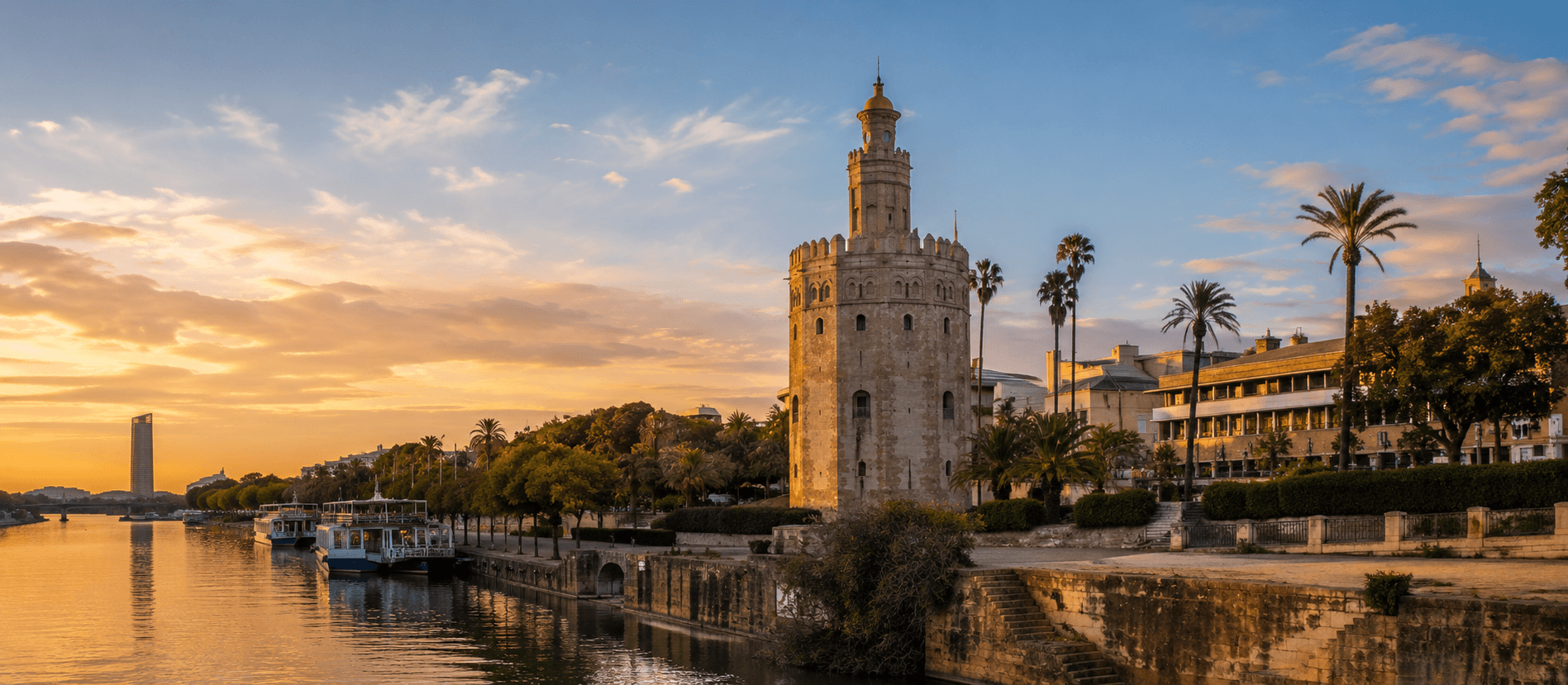
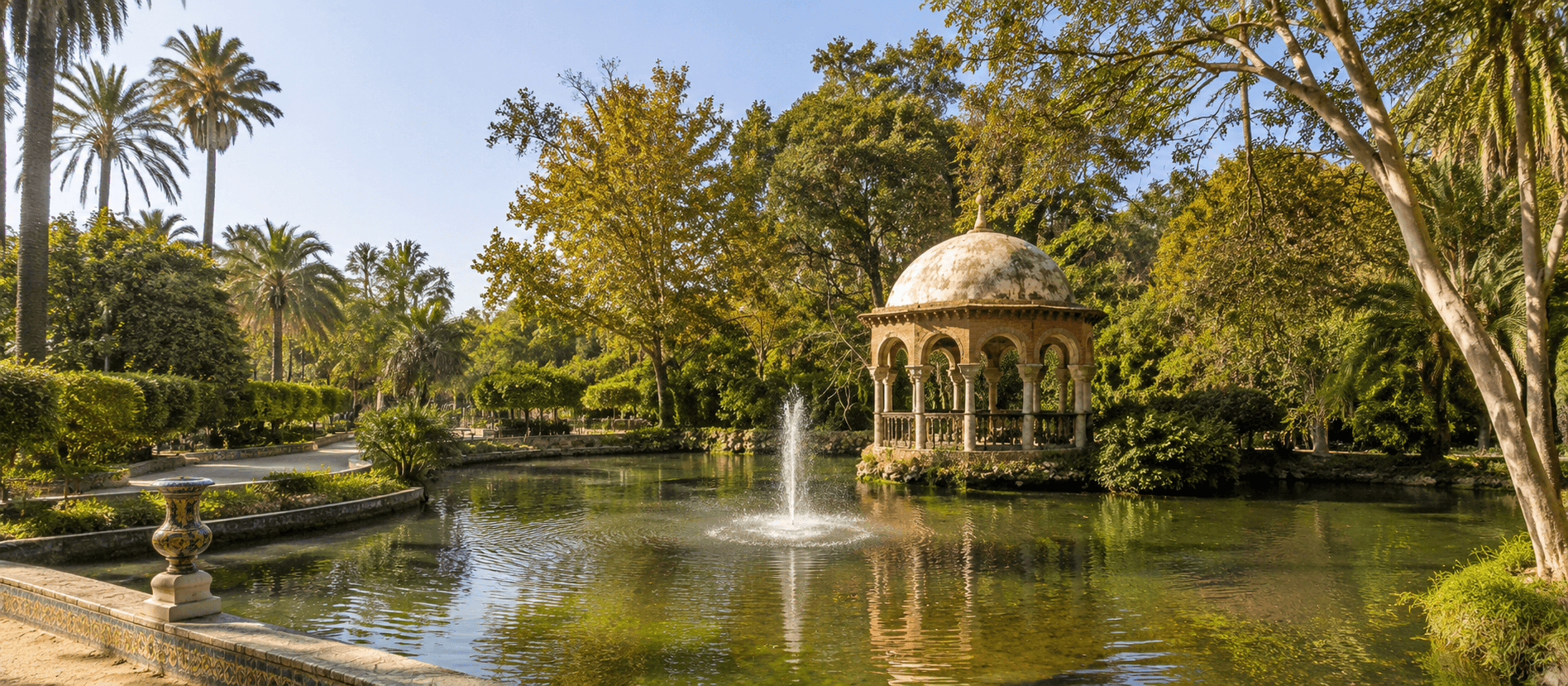
If you still have energy, continue toward the Guadalquivir River for a walk by the water, or head south toward the gardens of Murillo and María Luisa Park. Plaza de España is farther away but still reachable on foot for travelers who enjoy walking. For a shorter route, simply circle the cathedral area, passing the Puerta del Perdón, Avenida de la Constitución, and nearby cafés before returning to the old town streets at sunset.
4. Conclusion
La Giralda is worth visiting because it offers more than a panoramic view. It is a monument where Seville’s history can be read vertically: Almohad foundations, Christian transformation, Renaissance elegance, and modern civic pride. Whether you come for architecture, photography, history, or the simple pleasure of seeing the city from above, La Giralda gives travelers one of the clearest and most memorable introductions to Seville.