1. Historical Context
Few places in Seville make an entrance quite like Plaza de España. Set on the edge of María Luisa Park, this sweeping semicircular square was designed by Sevillian architect Aníbal González and built for the Ibero-American Exposition of 1929, an event intended to strengthen cultural and commercial ties between Spain and Latin America. Even before you know the history, the message is easy to read: the plaza opens outward in a grand architectural embrace.
Construction began in 1914 and the square was completed in time for the exposition. Its style is usually described as Spanish regionalist architecture, but that simple label hides a rich mix of influences: Renaissance-inspired symmetry, Moorish and Mudéjar decorative details, exposed brick, ceramic tiles, wrought iron, carved stone, and graceful arcades. The result is unmistakably Andalusian, formal yet warm, monumental yet full of handmade detail.
The plaza’s symbolism is built into its layout. The semicircular shape is often interpreted as Spain’s embrace of its former American territories, while the canal running along the façade adds both theatricality and movement. Four ornate bridges cross the water, traditionally associated with the historic kingdoms of Castile, León, Aragón, and Navarre. Around the base of the building, colorful tiled benches represent Spain’s provinces, each decorated with maps, coats of arms, and local scenes. Travelers often wander slowly from bench to bench, looking for a province connected to their route, family history, or curiosity.
Today, Plaza de España is not a museum behind glass. It is a living public space: people stroll under the arcades, pose on the bridges, rest by the fountain, listen to street musicians, and drift toward the gardens of María Luisa Park. That combination of grandeur and everyday life is what makes it one of Seville’s most memorable sights.
2. Prices and Visiting Time
The main square is free to enter. You do not need a ticket to walk around Plaza de España, cross its bridges, photograph the tilework, or enjoy the exterior architecture. Boat rentals on the canal, guided tours, performances, or nearby museums may have separate costs, so check current prices locally or on official websites before planning your budget.
Seville’s official tourism site currently lists Plaza de España as open Monday to Sunday, from 8 a.m. to midnight. Because this is a major public venue that can host concerts and summer events, visiting conditions may change temporarily. Always confirm opening hours and access on the official tourism website before you go, especially if your visit falls during festival season or a public holiday.
For most travelers, 45 to 90 minutes is enough for a satisfying visit. Allow at least 45 minutes if you simply want to see the architecture, take photos, and walk along the canal. Set aside closer to two hours if you want to study the provincial tile benches, explore the arcades, rent a boat, and continue into María Luisa Park.
The best time to visit is early morning or around sunset. Early morning brings softer light, fewer crowds, and a calmer atmosphere. Sunset is especially beautiful as the brick façade warms in the late light and the bridges reflect in the canal. Midday can be bright and hot, particularly in summer, so bring water, sunscreen, and a hat if you visit then.
Practical tip: the plaza is large and mostly open, so comfortable shoes matter. The site is easy to combine with a walk through María Luisa Park, and its broad layout makes it less rushed than many historic interiors in Seville. If you are visiting in summer, plan shade breaks in the park afterward.
3. What to Do Nearby After Visiting
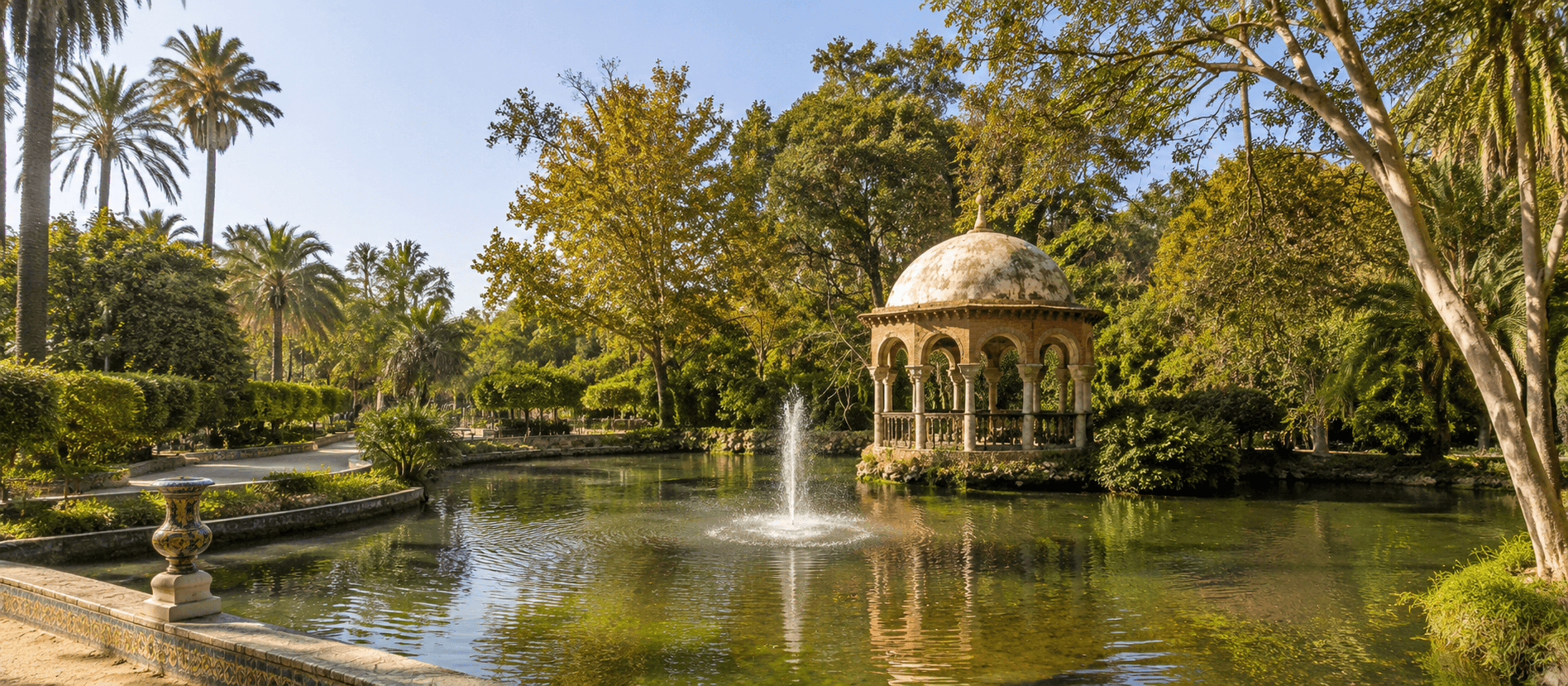
The easiest next stop is María Luisa Park, the green setting that surrounds the plaza. Its shaded paths, fountains, tiled corners, and leafy avenues make a peaceful contrast to the grand scale of Plaza de España. It is ideal for a slow walk, especially after a warm morning in the open square.
Continue south through the park to Plaza de América, another Aníbal González design created for the 1929 exposition. This elegant square is framed by three notable buildings: the Museum of Arts and Popular Customs, the Archaeological Museum, and the Royal Pavilion. The Museum of Arts and Popular Customs is a rewarding stop for visitors interested in Andalusian traditions, ceramics, costumes, embroidery, posters, and everyday cultural history. Check opening hours before going; the official tourism page notes seasonal schedules and Monday closures. The Archaeological Museum has been listed as temporarily closed for renovation, so verify its status before adding it to your itinerary.
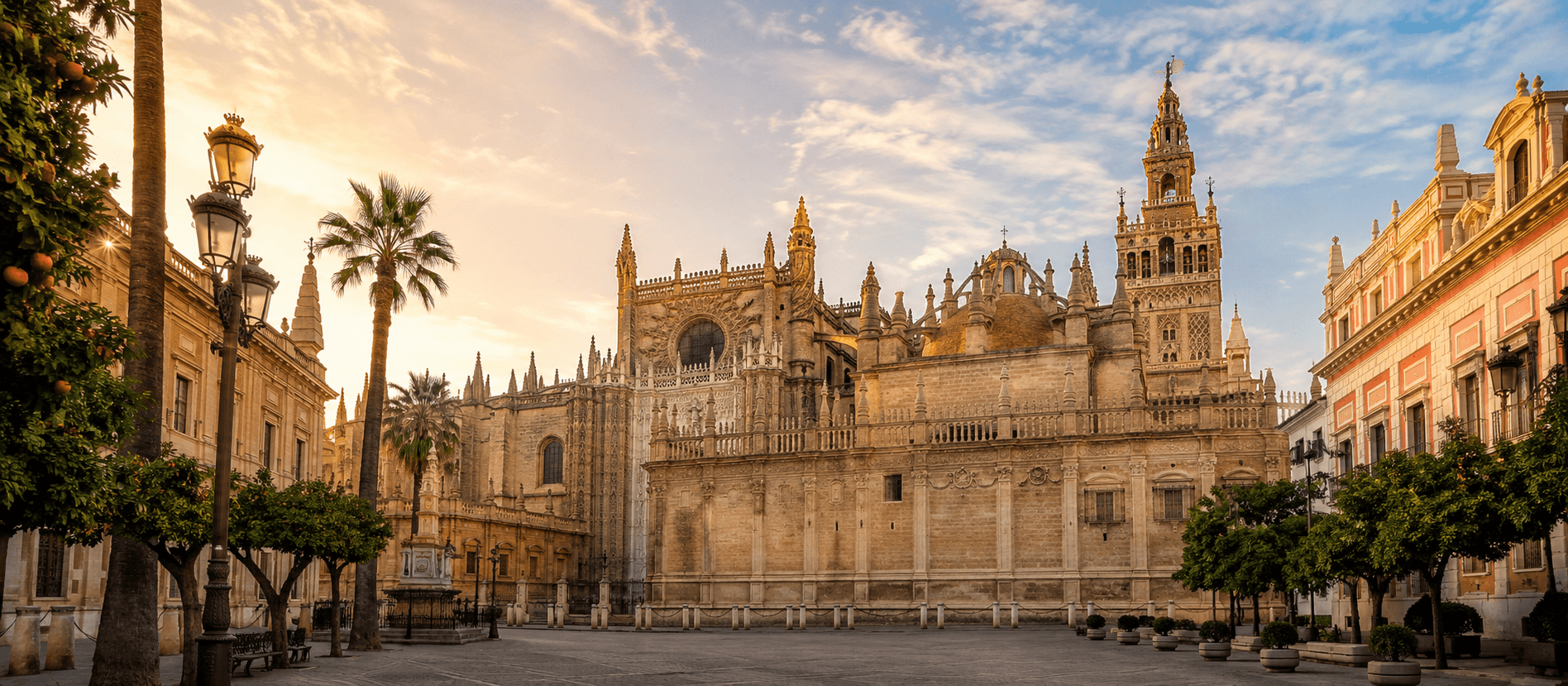
If you prefer a broader city walk, head back toward the historic center. From the Plaza de España area, you can continue toward the University of Seville, the gardens around San Telmo, Puerta de Jerez, and then on to the Cathedral, the Giralda, the Royal Alcázar, and the Archivo de Indias. This route works especially well if you want to connect Seville’s early twentieth-century urban showpiece with its older royal, religious, and colonial history.
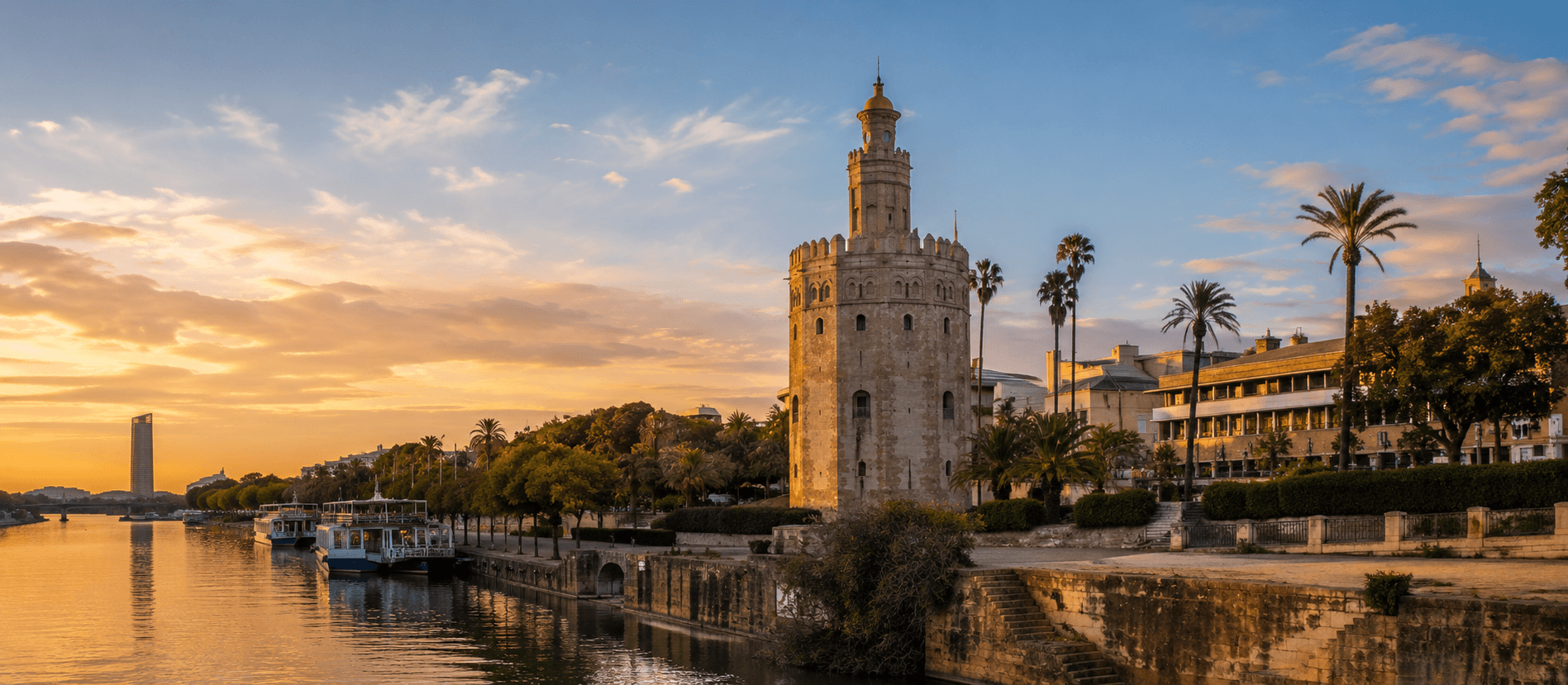
Another pleasant option is to drift west toward the Guadalquivir River. The riverside walk gives you a different view of the city and can lead toward the Torre del Oro, Triana, or riverside terraces for a drink. For cafés, look around the streets between the university, Puerta de Jerez, and Calle San Fernando; it is an easy area to pause before returning to the old town.
4. Conclusion
Plaza de España is worth visiting because it captures Seville at its most theatrical and generous: sunlit brick, painted ceramics, water, gardens, and history arranged on a grand scale. It is free, easy to enjoy, and rich in detail, whether you stay for twenty minutes or spend a whole morning nearby. Come early, walk slowly, and let the tiles, bridges, and open sweep of the square tell the story.