1. Historical Context
Few places in Seville tell the city’s story as vividly as the Real Alcázar. Behind its walls, Islamic, Christian, Mudéjar, Gothic, Renaissance and later styles overlap in a way that feels less like a museum display and more like a living map of Andalusian history.
The Alcázar’s origins go back to the early 10th century, when Abd al-Rahman III, Caliph of Córdoba, ordered a new seat of government in Seville. Later Muslim dynasties expanded the complex, and after the Castilian conquest of Seville in 1248–49, the site became a royal residence. That political continuity is part of what makes the monument so powerful: it has remained a place associated with royal authority for centuries and is still used by Spain’s royal family when in Seville.
The most famous part of the complex is the Mudéjar palace of King Pedro I, built in the 14th century. Its delicate stucco, tiled walls, carved wooden ceilings and tranquil courtyards show how Christian patrons in medieval Spain adopted and adapted Islamic artistic traditions. The Patio de las Doncellas, with its long reflecting pool and lace-like arches, is one of the palace’s most memorable spaces. Just as important are the gardens: a layered landscape of fountains, orange trees, palms, shaded paths and quiet corners where water softens the heat of the city.
Together with Seville Cathedral and the Archivo de Indias, the Alcázar forms part of a UNESCO World Heritage Site. The three buildings sit close together in the historic center and represent key chapters of Seville’s past: Islamic rule, Christian monarchy and the city’s role in Spain’s Atlantic empire.
2. Prices and Visiting Time
The Real Alcázar is one of Seville’s busiest monuments, so booking ahead is strongly recommended. Tickets can be bought through the official Alcázar website or at the ticket office in the Patio de Banderas from 09:00, where payment is by card only. Because prices, schedules and access conditions can change, travelers should always confirm details on the official website before visiting.
At the time of writing, the general admission ticket is €15.50. A reduced ticket is €8.00 for eligible visitors such as seniors over 65, students aged 14 to 30, and holders of the European Youth Card in that age range; proof is required. Entry to the Cuarto Real Alto, the upper royal apartments, costs an additional €5.50 and usually requires a timed slot. Some visitors, including children up to 13 accompanied by an adult and residents or people born in Seville municipality, may qualify for free entry but still need the appropriate ticket.
Opening hours are seasonal. From 1 October to 31 March, visits run from 09:30 to 17:00, with clearing of the site beginning at 17:45. From 1 April to 30 September, visits run from 09:30 to 19:00, with clearing beginning at 19:45. The monument is normally closed on 1 January, 6 January, Good Friday and 25 December.
Allow at least two hours for a focused visit, and closer to three if you enjoy gardens, photography or slow wandering. The best time to visit is first thing in the morning, when the courtyards are quieter and the light is gentle. In the hotter months, an early slot is also more comfortable for exploring the gardens. Late afternoon can be atmospheric too, but leave enough time to see both the palace rooms and outdoor areas before closing procedures begin.
3. What to Do Nearby After Visiting
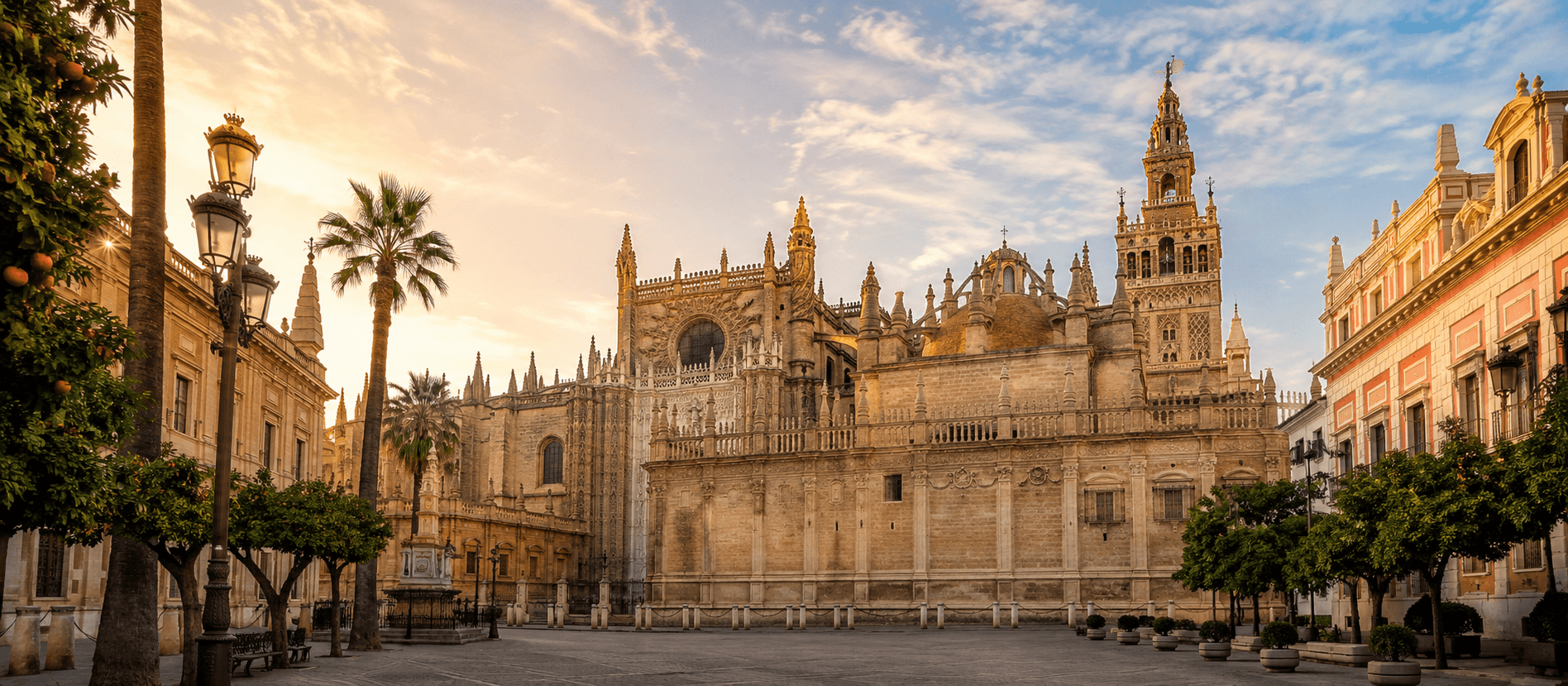
The Alcázar sits in one of the richest sightseeing zones in Spain, so you do not need to go far after your visit. Just outside the walls is Plaza del Triunfo, where you can take in the monumental triangle of the Alcázar, Seville Cathedral and the Archivo de Indias.
Seville Cathedral and the Giralda are the obvious next stop. The cathedral is vast, dramatic and rewarding, and the Giralda tower offers one of the best historic viewpoints in the city. If you want to combine both major monuments in a single day, consider visiting the Alcázar in the morning, stopping for lunch, then entering the cathedral later.
The Archivo de Indias, housed in a sober Renaissance building, is also nearby and often overlooked. Its exhibitions introduce Seville’s role in the Spanish empire and the history of transatlantic trade and administration. It is a calm, worthwhile counterpoint to the decorative richness of the Alcázar.
For a gentler walk, slip into Barrio Santa Cruz, Seville’s old Jewish quarter. Its narrow lanes, whitewashed houses, small squares and orange trees make it ideal for wandering without a strict route. Look for Callejón del Agua and the quiet plazas around it, but remember this is also a residential neighborhood, so visit respectfully.
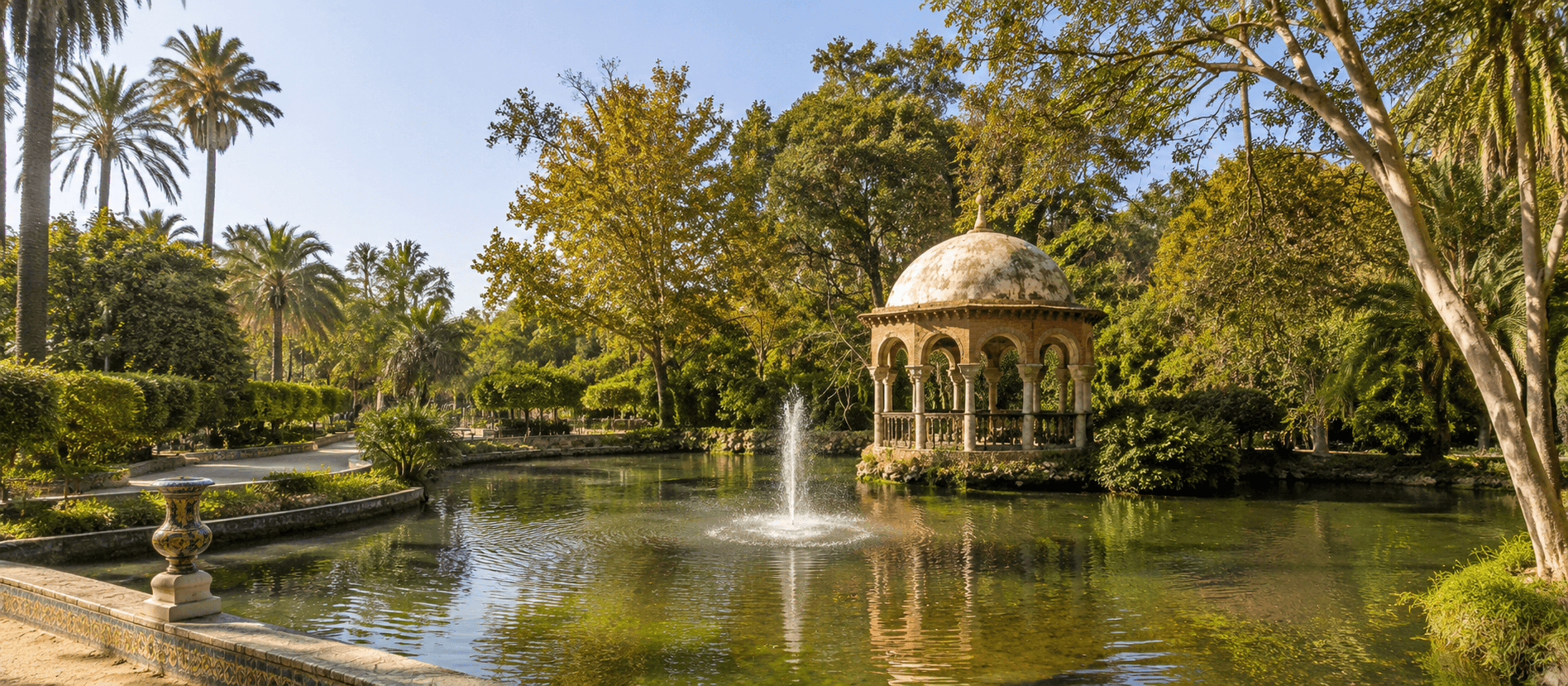
If you still have energy, continue south through the Jardines de Murillo toward María Luisa Park and Plaza de España. The walk takes you from medieval Seville into the grand civic spaces of the early 20th century, with tiled bridges, fountains and wide avenues. For a simpler ending, settle at a café terrace near the cathedral or in Santa Cruz and let the palace settle in your memory over coffee, cold drinks or tapas.
4. Conclusion
The Real Alcázar is worth visiting not only because it is beautiful, but because it makes Seville’s layered history visible. Every arch, tile, garden path and pool reflects a city shaped by many cultures and many centuries. For travelers, it is one of those rare monuments that rewards both careful looking and unhurried wandering.