If you are planning a Gdańsk itinerary for a first visit, two days is enough time to see the city’s historic heart and get a feel for the places that shaped modern Polish history. Gdańsk’s Main Town is packed with landmarks along the Royal Route, from the Green Gate and Long Market to St. Mary’s Basilica and the waterfront by the Motława River.
But Gdańsk is not just a postcard-perfect old city. A good 2 days in Gdańsk should also leave room for the city’s 20th-century story: the shipyard area, the European Solidarity Centre, and the Museum of the Second World War. That combination is what makes Gdańsk such a rewarding weekend trip for first-time visitors.
This guide balances the classic Old Town highlights with a practical route beyond the center. Opening hours, prices, and access rules can change, so confirm all fast-moving details on the official websites before you visit.
Why Gdańsk matters
Gdańsk has long been one of the most important cities on the Baltic coast, and its identity is shaped by trade, maritime life, and major political change. The Main Town’s historic streets and waterfront help explain the city’s role as a Hanseatic port, while later sites such as the shipyard and solidarity landmarks show how Gdańsk became central to Poland’s modern democratic story.
The city’s museums and public spaces make that history easy to read on foot. In practice, that means a first-time visitor can move from Gothic and Renaissance architecture in the center to the industrial waterfront and major museums in just a couple of days.
Day 1: Royal Route, Main Town, and the Motława waterfront
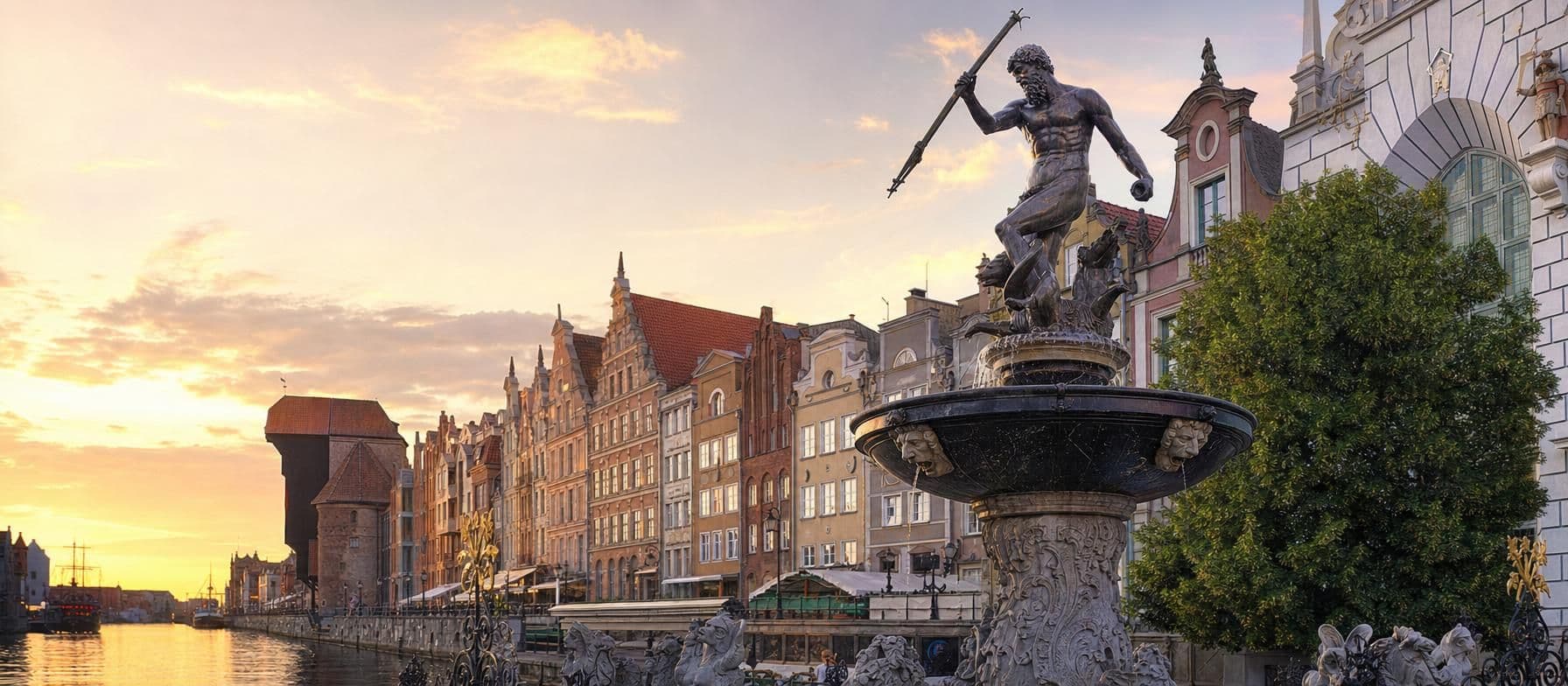
Start in the Main Town, where the old ceremonial route creates the most classic Gdańsk introduction. The Royal Route runs through the city’s historic core and includes key sights such as the Golden Gate, Long Street, Long Market, Neptune’s Fountain, and the Green Gate. The route is the best place to understand the city’s historic grandeur and to get your bearings before branching out.
Pause at the Main Town Hall, which stands at the junction of Długa and Długi Targ. The building dates back to the Middle Ages and served as the seat of city authorities until 1921. Today it is part of the Museum of Gdańsk, and in summer its tower offers panoramic views over the city. As with all museum branches, accessibility can vary because these are historic buildings, so check the official museum page before your visit.
From there, continue to St. Mary’s Basilica. Official city tourism materials describe it as the largest brick church in the world, and its tower gives one of the best viewpoints in Gdańsk. Expect a serious climb if you go up: the tourism office notes that nearly 400 steps lead to the gallery, so this is best for travelers comfortable with stairs.
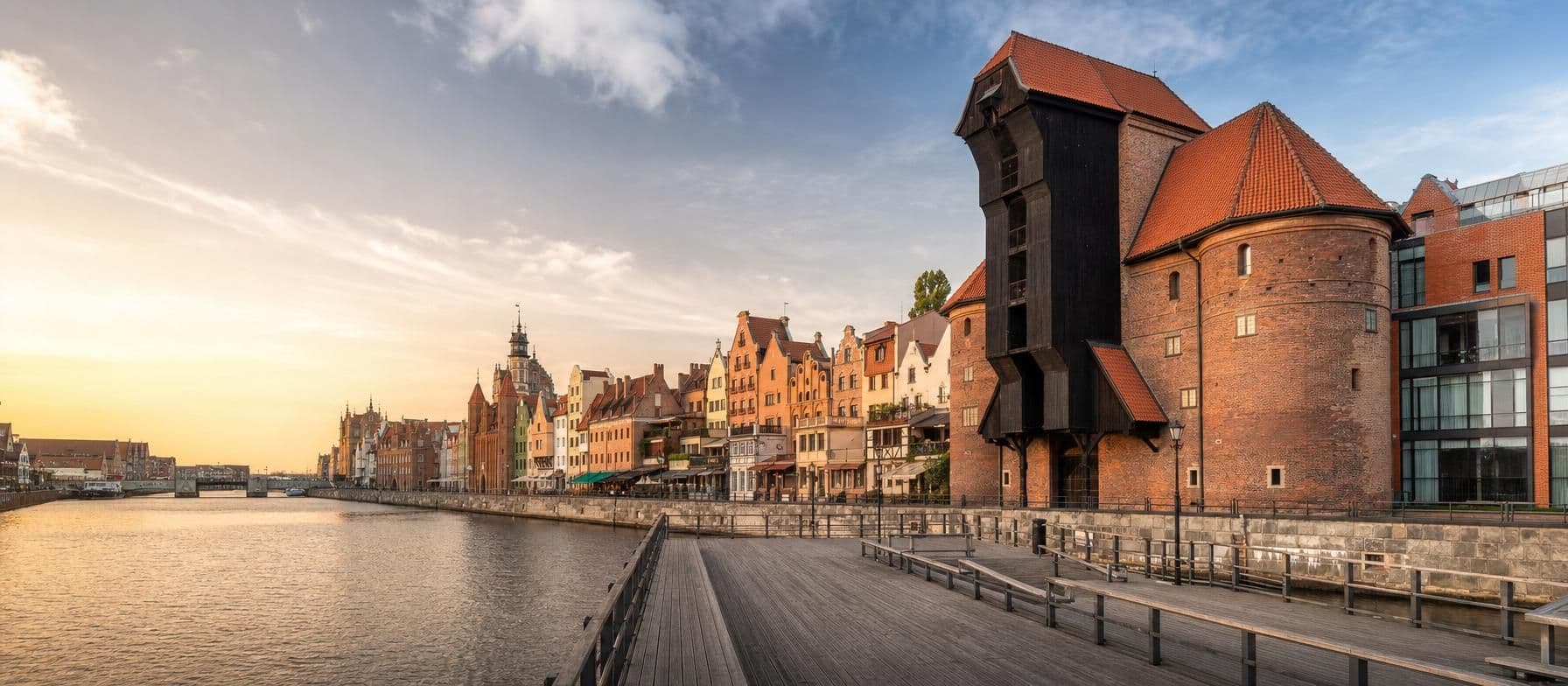
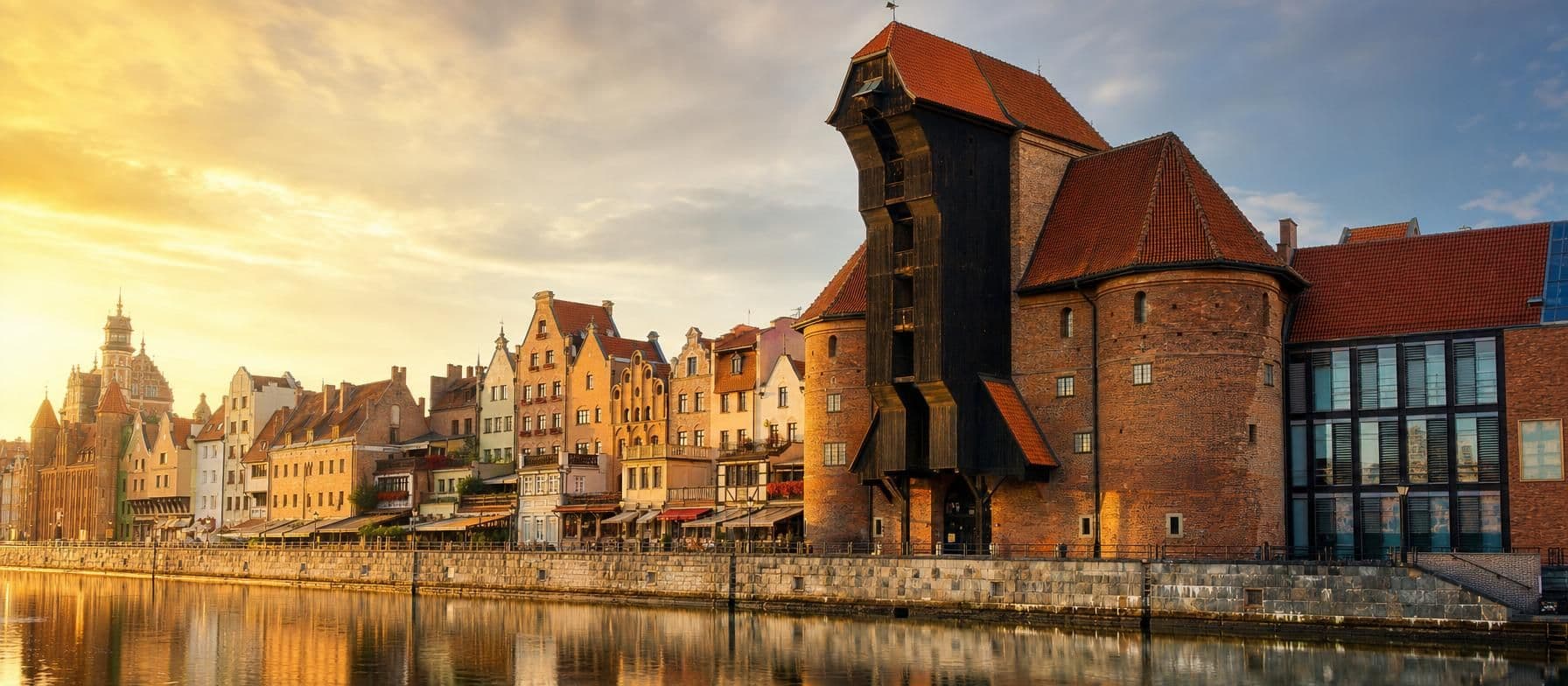
Finish the day on or near the Motława waterfront. The Crane is one of the city’s most recognizable symbols and a reminder of Gdańsk’s old port economy. Nearby quays and pedestrian streets are ideal for an early evening walk, especially if you want photos in softer light and a relaxed dinner overlooking the river.
- Best pacing: allow most of the day for the Main Town and riverside area.
- If you want a museum stop, the Museum of Amber fits naturally into this day.
- Stay in the historic center if possible so you can do most of Day 1 on foot.
Day 2: Shipyard history, solidarity, and a broader view of the city
Use your second day to see the Gdańsk that most first-timers miss. Begin at the European Solidarity Centre, located on Plac Solidarności in the shipyard area. The institution was established on the site where the Solidarity movement emerged, and its purpose is to preserve that memory. Official opening hours vary by season, so confirm the current schedule on the ECS website before you go.
After the ECS, walk through the nearby shipyard district and keep an eye out for the surrounding urban landscape. This part of the city gives useful context for Gdańsk’s role in late-20th-century Polish history. It also makes a strong contrast with the decorative streets of the Main Town, which is exactly why the second day should move beyond the postcard zone.
In the afternoon, head to the Museum of the Second World War. The museum is in the city center near the Motława River and opens Tuesday to Sunday, with published opening hours that can change on holidays. The museum also notes a Tuesday visitor limit for safety and order reasons, so booking ahead is sensible for busy travel periods.
If you have extra energy, finish the day in Oliwa. It is one of Gdańsk’s oldest districts, and its park-and-cathedral combination offers a calmer ending to a busy city break. It is a good place to slow down before dinner, especially if you prefer a quieter neighborhood after two museum-heavy days.
- For a shorter second day, choose either the ECS or the Museum of the Second World War, not both.
- Book or check ticketing details in advance if you are traveling in summer or on a weekend.
- Oliwa is a useful add-on if you want greenery and a slower neighborhood feel.
Practical travel tips for a first-time visit
Gdańsk is easy to explore on foot in the historic center, but the wider itinerary works better if you combine walking with trams or rideshares. The old streets are compact, yet the shipyard area, the Museum of the Second World War, and Oliwa are more comfortable with short transfers.
Crowds are usually heaviest around the Royal Route and the waterfront in peak season, so start early if you want quieter photos and shorter queues. For the same reason, museum visits are best scheduled in the morning or late afternoon, with the middle of the day reserved for outdoor walking.
Because many of Gdańsk’s key sites are historic buildings, accessibility is not always straightforward. The Museum of Gdańsk notes that its branches are in historic structures and cannot fully remove architectural barriers everywhere, so travelers with mobility concerns should review accessibility details on the official site before booking.
Weather on the Baltic coast can change quickly, even in summer, so bring a light layer and comfortable shoes. If you are visiting in winter or during shoulder season, double-check seasonal opening times, especially for towers, viewpoints, and transport-dependent add-ons.
The best way to experience Gdańsk in 2 days
A strong Gdańsk weekend trip is all about contrast: ornate merchant-city streets on one side, and the city’s shipyard and museum districts on the other. That balance gives first-time visitors a fuller picture than the Old Town alone can provide.
If you follow this itinerary, you will leave with the essentials: the Royal Route, the Motława riverfront, the city’s modern history, and one quieter neighborhood beyond the center. That is enough to understand why Gdańsk remains one of Poland’s most compelling city breaks.
Before you go
For first-time visitors, Gdańsk rewards a two-day stay beautifully. The Old Town gives you architecture, atmosphere, and river views; the second day adds history, depth, and a stronger sense of place. If you want a city break that feels both walkable and meaningful, Gdańsk is absolutely worth the time.
Facts to verify
- Current prices, opening hours, booking rules, transport schedules, and seasonal conditions should be verified before publishing.
- Tower access and ticket requirements for St. Mary’s Basilica should be checked on the official site before visiting.
- Current ECS opening hours and exhibition/ticket rules should be checked before publishing.
- Current Museum of the Second World War opening hours, Tuesday visitor limits, and ticketing conditions should be checked before publishing.
- Museum of Gdańsk accessibility details and any branch-specific access rules should be checked before publishing.